

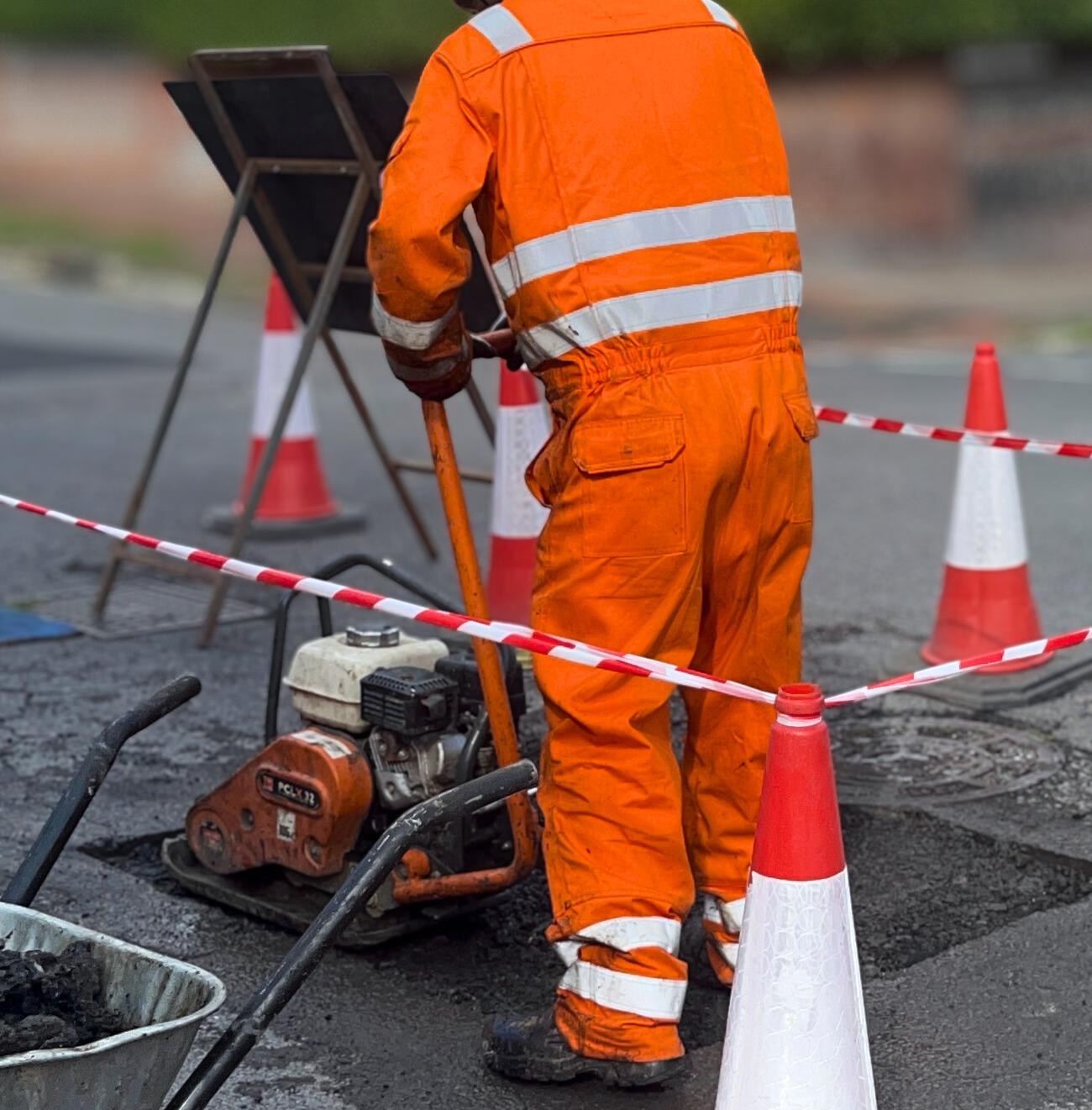
Over the last month, we’ve taken you behind the scenes to show exactly what happens from the moment a pothole is reported to the point it’s repaired.
Our aim? To help explain the processes, people, and decisions that keep roads moving - every single day.
Week 1 – What Causes Potholes & How to Report Them
We kicked things off by looking at how potholes form. Water, freezing temperatures, heavy vehicles, and repeated wear all play a part.
We also highlighted the quickest way to report an issue: our online map. It’s fast, accurate, and gives you real‑time updates on progress.
Week 2 – A Day in the Life of a Highway Steward & Intervention Levels
In week two, we went on the road with one of our Highway Stewards. These are the people inspecting defects, responding to enquiries, and making safety‑critical decisions every day.
We also explained intervention levels - the criteria that help us prioritise repairs fairly and effectively within the county’s available resources.
Week 3 – How Potholes Are Repaired
We explored the two main repair types:
- Cut out and fill, using hot tarmac for long‑lasting results.
- Cold‑lay materials, used for temporary repairs.
We also explained why temporary repairs are sometimes necessary when weather, access or materials mean a permanent fix must wait.
Week 4 – Quality Checks & the Operational Control Hub
In week four, we focused on quality. Repairs are photographed, reviewed, and checked to ensure they meet our standards.
We also introduced the Operational Control Hub, the engine room that monitors data, organises crews, and keeps work across the county moving smoothly.
Thank you for following
We hope this has helped shed light on the decision‑making behind every repair.
Your reports help us keep the county moving - so if you spot an issue, please let us know: Report a Problem – live.eastsussexhighways.com