

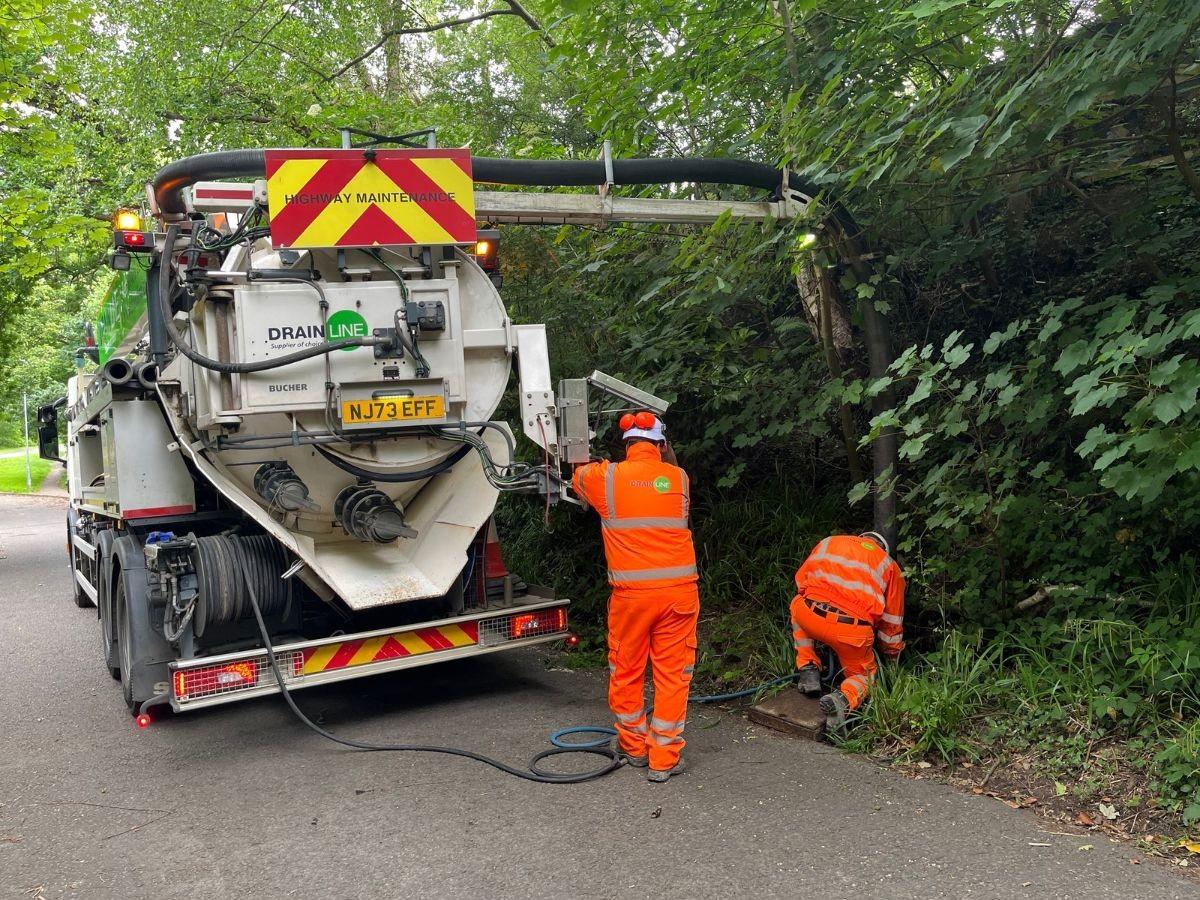
Flooding may be most visible during heavy rainfall, but preventing and managing it is a year-round job.
Behind the scenes, East Sussex Highway's Drainage Team maintain and investigate the county's drainage network to help reduce the risk of flooding on the highway.
We caught up with the team to discuss their winter preparations, biggest challenges, and what residents might be surprised to learn about their work.
For anyone unfamiliar with highway drainage, what does the Drainage Team do and why is it so important?
The team is responsible for helping surface water drain safely away from the highway network. Our work includes routine maintenance such as cleaning and removing silt and debris from gullies, maintaining highways-owned ditches, investigating reports of flooding, inspecting underground drainage systems, and developing repair and improvement schemes for larger issues.
The role goes beyond simply clearing blocked drains. The team prioritises locations based on risk, coordinates repair and improvement works, and works with landowners, utility companies and environmental specialists to resolve issues across the county.
Ultimately, highway drainage is about protecting people, property and the road network. While no drainage system can prevent flooding during extreme weather events, regular maintenance helps reduce the likelihood and impact of flooding.
People often notice flooding when it happens, but what work goes on behind the scenes throughout the year to help prevent it, and how do you decide which gullies need attention first?
A significant amount of work takes place throughout the year, long before flooding becomes visible. The team delivers a planned programme of gully and drainage maintenance across East Sussex. Assets are cleaned on a 12, 24 or 36-month cycle depending on their level of risk. Roads with higher silt levels, a history of flooding, and those on key routes are inspected and cleaned more frequently.
Alongside this planned work, drainage crews monitor asset performance, investigate reported defects, respond to flooding reports and carry out reactive repairs where needed.
Importantly, every visit helps build a picture of how the network is performing. Maintenance records, inspection findings and reports from residents all help the team identify locations that may require closer attention in the future.
How do you prepare for the busier winter season and wetter weather?
Preparation for winter starts months before the weather starts changing.
The team works throughout the year to identify known problem locations, maintain drainage assets and complete preventative works that can help reduce flooding risks during wetter months. Additional resources, including specialist jetting equipment, are also made available during the winter period.
While preparation can reduce risk, the team recognises that significant rainfall can still overwhelm drainage systems. During periods of prolonged bad weather, resources are prioritised to focus on locations where flooding presents the greatest risk to road users, homes or businesses.
What are some of the most common causes of blocked drains and flooding across East Sussex?
Contrary to what people might expect, on the surface a blocked drain is not always the root cause of flooding.
Common causes include:
-
Tree roots entering drainage pipes and causing damage or blockages.
-
Silt, debris and natural material within drainage systems, reducing capacity.
-
Restricted waterflow through ditches.
-
Ageing, damaged or collapsed pipes.
-
Materials that should never enter the drainage system, including concrete, oil and other waste products.
-
Illegal or inappropriate discharge of water into highway drainage systems.
When a report of flooding comes in, what happens next?
Resolving a flooding issue can be a lengthy process, particularly when the cause is not immediately visible.
When flooding is reported, the team reviews the information and investigates the cause, often using camera surveys to inspect underground pipes. Once the issue has been identified and assessed against other priorities, the team develops a suitable solution - whether it's a blockage, damaged pipe, tree roots or a downstream restriction.
Proposed works are then assessed for safety, cost and environmental impacts before being approved and scheduled. This can involve coordinating road space, landowners and utility companies. Once work begins, the team may need to adapt plans if unexpected underground conditions are discovered.
How extensive is the drainage network across East Sussex?
East Sussex has around 2,097 miles of road, served by more than 98,000 drainage gullies that collect surface water and direct it into drainage systems, watercourses and ditches.
The county is also responsible for approximately 505 kilometres (314 miles) of highway ditches, which are maintained through a cyclical programme of clearance and refurbishment.
While highway drainage assets are mapped and recorded, the condition of underground infrastructure and the underlying cause of flooding are not always apparent until detailed inspections or excavation work are carried out.
What are some of the biggest challenges when investigating flooding and delivering drainage improvements?
One of the biggest challenges is that much of the drainage network cannot be seen.
Surface water may indicate where flooding is occurring, but not necessarily where the underlying problem lies. Camera surveys are extremely useful, but they cannot reveal everything, and some issues only become apparent once excavation begins.
Other challenges include:
-
Unexpected pipe routes and buried infrastructure.
-
Utility services affecting proposed designs.
-
Environmental constraints involving wildlife, trees and watercourses.
-
Access issues and working on or near private land.
-
Securing road space and coordinating works safely on busy roads.
How important is collaboration when resolving drainage problems?
Collaboration is essential. Given the rural nature of East Sussex, many highway drainage systems discharge into ditches that are owned and maintained by private landowners. While the highway network has rights to discharge surface water into these ditches, their maintenance often relies on close cooperation with landowners.
Investigations can also involve water companies where drainage systems interact or where responsibilities overlap. In some locations, drainage networks are interconnected, meaning that understanding the source of an issue may require input from multiple organisations.
The team also works closely with utility companies, permit teams, environmental specialists and East Sussex County Council to coordinate works, share road space and ensure residents and road users are kept informed.
Maintaining effective drainage is rarely the responsibility of a single organisation, and successful outcomes often depend on everyone working together.
Finally, what would you like residents to know about the work that goes into keeping East Sussex's roads draining effectively?
There are a few things that people may find surprising.
A clear gully does not necessarily mean a drainage system is working properly. Water may still be unable to drain away if there is a blockage further along a pipe or within a ditch downstream.
Many flooding issues involve a degree of detective work. Camera surveys help identify problems, but some defects are only discovered once excavation begins.
Residents can play an important role too. Reporting flooding and providing as much information as possible, including photographs taken safely, helps the team assess problems and prioritise investigations. Multiple reports from different people can also help build a clearer picture of recurring issues. If possible, wait a few hours after heavy rainfall before reporting, as surface water can take time to drain away, particularly after intense downpours following a long dry spell when the ground takes longer to absorb water.
The public should also be aware that highway drainage maintenance continues throughout the year, even when there is no visible flooding. Teams are constantly inspecting, cleaning and recording the condition of assets to help target future investment and maintenance where it's needed most.
As winter approaches, the Drainage Team will continue preparing for periods of wet weather and responding to reports across the county. While many of their efforts happen underground and out of sight, their work plays a vital role in helping keep East Sussex moving safely.