

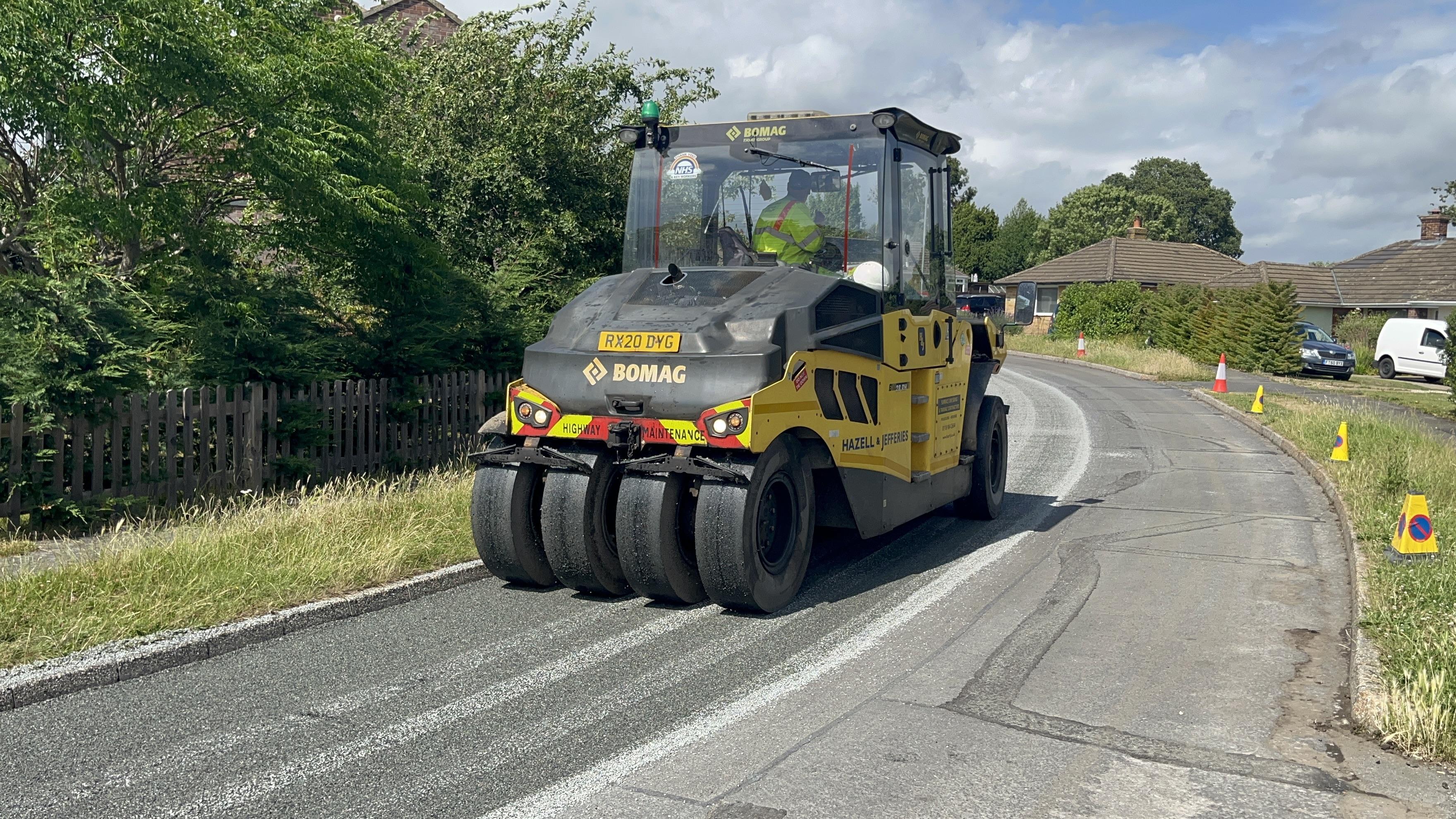
Road users travelling across East Sussex may notice roads that look freshly covered in small stone chippings this summer.
This is part of the county’s annual surface dressing programme - a preventative treatment designed to protect roads and keep them safer for longer.
What is surface dressing?
Surface dressing is a preventative treatment used to maintain roads while they are still in good condition (before they become worn out or damaged). It involves applying a thin layer of liquid bitumen (a sticky, tar-like material) to the road surface, followed by a layer of stone chippings. These chippings are rolled into place to create a durable, textured finish.
Put simply, it acts as a protective seal for the road, helping to lock out water, slow deterioration and restore grip.
How is it carried out?
Surface dressing is a quick and efficient process, which helps reduce disruption for residents and road users. While approaches can vary slightly depending on the site, the process typically includes:
- Preparation: Any minor repairs are completed in advance by way of pre-patching the road surface.
- Application: A layer of liquid bitumen is sprayed evenly across the road surface.
- Chippings added: Stone chippings are spread over the surface and rolled in to form a strong bond.
- Traffic helps finish the job: Roads are often reopened quickly, with vehicles helping to press the stones securely into place.
- Sweeping and finishing: Excess chippings are removed after around 3 days and one week after application, before road markings are refreshed.
Temporary 20mph speed limits are introduced following the works to keep road users safe while the new surface settles.
Why do we use surface dressing?
Surface dressing plays an important role in keeping East Sussex moving. Rather than waiting for roads to fail and require expensive resurfacing, this treatment helps prevent problems before they start.
Key benefits include:
- Improved safety: The new surface increases grip, helping to reduce skidding and improve braking.
- Protection from water damage: By sealing the surface, this treatment prevents water from seeping into the road structure, reducing the risk of cracks and potholes forming.
- Longer-lasting roads: Applying surface dressing at the right time can significantly extend the life of the road, delaying the need for more expensive repairs
- Better value: Surface dressing costs significantly less than repeated defect repairs or full resurfacing, which would be required if roads were left to deteriorate.
- Reduced disruption: Most treatments can be completed quickly, with roads reopening soon after works are finished.
A proactive approach to highways maintenance
Surface dressing is most effective on roads that are structurally sound. By treating them at the right time (before deterioration), we can protect the road surface, avoid and defer costly repairs, and keep journeys safer for everyone.
As part of a wider maintenance programme, it helps ensure that investment in the county’s road network goes further, delivering better value and more reliable roads for residents, businesses and visitors alike.
A blog by Ros, Asset Manager at East Sussex County Council