
When roadworks appear overnight, it's easy to assume work begins when the cones go out. In reality months of planning, surveys, coordination and problem-solving happen long before teams arrive on site
Following the successful completion of the A22 Millbrook improvement works, we spoke with the Project Manager about what it takes to deliver a highways scheme of this scale, the challenges faced along the way, and the teamwork required to keep East Sussex moving.
Let's start at the beginning. For anyone who hasn't been following the project, what were the A22 Millbrook works all about?
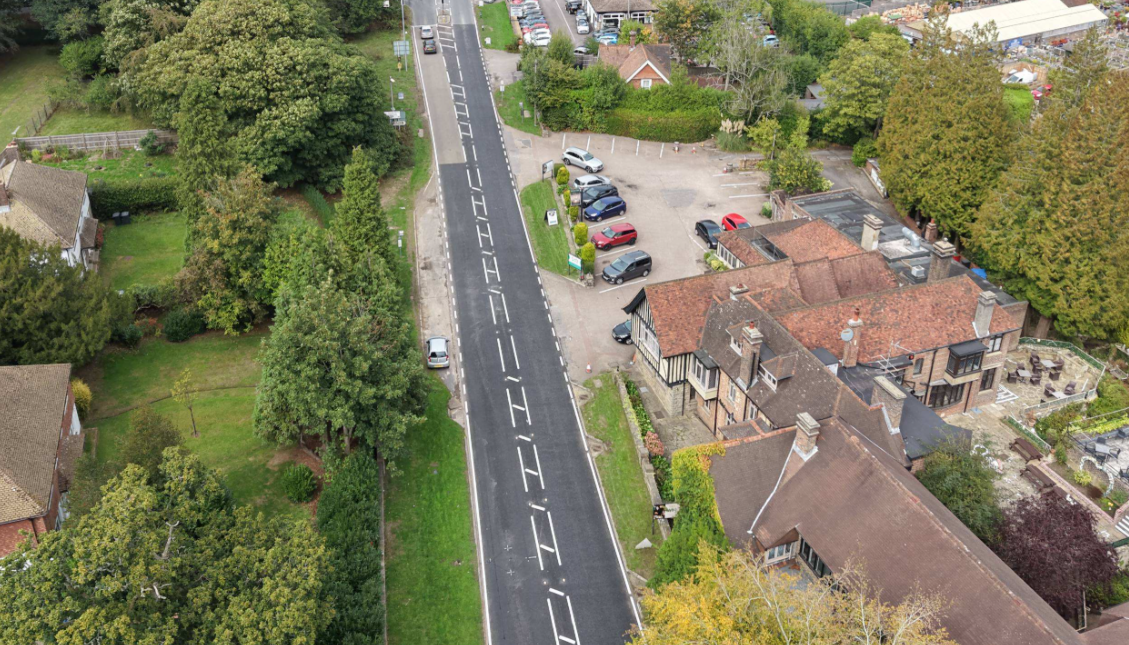
The scheme focused primarily on major patching works to improve the condition of the carriageway. Over time, sections of the road surface had become delaminated, meaning the top layer had started to break away and deteriorate.
While there was no immediate safety risk, the road had become rough and uncomfortable to drive on and was showing clear signs of wear. The works were designed to restore the road surface, improve ride quality and extend the life of the carriageway. We also carried out some minor drainage improvements as part of the project.
How long had this scheme been in the making before people started seeing activity on site?
The planning and design process began in autumn 2025.
A project like this typically takes around six months to progress from design through to delivery, although that can vary depending on factors such as road space availability, environmental considerations and any local constraints. In this case, because the works were located within Ashdown Forest, there were additional ecological and environmental requirements that needed to be carefully considered.
A lot of people only see the roadworks themselves. What was happening behind the scenes to get everything ready?
There's a huge amount of work that takes place before any construction activity starts.
The project first goes through a design and validation process to identify the most appropriate solution for the road condition. From there, a review of the environment is carried out to ensure we're not negatively impacting the surrounding area, including ecological surveys where required.
After booking road space, we then undertake site investigations to confirm the condition of the road beneath the surface. For this project, we carried out coring investigations, which involve drilling into the existing road structure to assess the condition, composition and depth of the pavement layers. These findings help us identify the most appropriate treatment and ensure we deliver the most effective long-term solution.
Once we’ve taken steps to inform local residents and businesses, we finally begin mobilising teams, considering elements such as site-specific risks, and how we consider health and safety before getting to site.
This was a complex project with a few challenges along the way. What were some of the biggest hurdles the team faced?
The location itself presented several challenges. The A22 is a major route and an important link for both local communities and longer-distance journeys, including into London, so securing appropriate road space and planning diversion routes required careful coordination.
The environmental considerations were also significant due to the works taking place within the Ashdown Forest area – a Site of Special Scientific Interest (SSSI) - which has protected habitats and species.
On top of that, we had to coordinate a large number of people and organisations working together on site. Like any big project, there were operational challenges too, including equipment issues, access requirements and the potential impact of weather conditions.
We also experienced delays due to circumstances outside of the project's control. An emergency water leak on the A275 required resources and attention and therefore pushed the works back, while environmental considerations also led to an earlier postponement.
Was there a particular moment when plans had to change or the team had to think on its feet?
One of the biggest examples was when a key piece of plant equipment broke down during the works.
At that point, the team's immediate priority was making sure the road could be left safe for road users. There was a huge amount of communication between the project team, site staff and transport teams to make that happen quickly.
We also relied on our out-of-hours teams, who helped put temporary measures in place – including laying down sand - so the road could safely reopen during the day before work resumed the following evening. It was a great example of how important communication and teamwork are when unexpected situations arise.
Delivering a scheme like this involves a lot of people. Who was involved and how did everyone work together to keep things moving?
There were a lot of teams involved throughout the project.
This included designers, project managers and an internal project team, the commercial team, planning and environmental specialists, the network management team, communications colleagues, supervisors, subcontractors, utilities companies and health and safety professionals.
There was also close collaboration with the stakeholder team, public transport representatives and traffic management contractors, in addition to the out of hours and reactive site teams.
The key to keeping everything moving was communication. Throughout the project we used a mixture of face-to-face meetings, phone calls, emails and instant messaging to ensure everyone stayed informed and aligned from start to end.
The A22 is a busy route. How did the team balance carrying out the work while managing disruption for road users and local communities?
Communication was absolutely vital. We maintained close contact between the project team, network management team, transport operators, communications team and the public to ensure information was shared quickly and accurately.
Where possible, we planned works to minimise disruption and kept stakeholders updated throughout the project so people could plan their journeys accordingly.
What's something that most people would be surprised to learn about delivering a highways project of this scale?
Probably the sheer amount of preparation and coordination involved before work even begins.
Something as visible as roadworks on site is really the final stage of a much longer process. There can be vast amounts of people, organisations and specialist contractors involved in delivering a scheme safely and effectively.
The other thing people might not realise is that safety influences every decision we make. If anything changes on site, work stops immediately until it's safe to continue. Safety isn't just part of the project; it drives everything we do.
Looking back now the works are complete, what are you most proud of?
I'm most proud of the outcome and the way everyone worked together to achieve it.
There were a lot of moving parts and a number of challenges to overcome, but people collaborated, communicated and found solutions whenever issues arose. Seeing all those different teams come together and successfully deliver the project was incredibly rewarding.
And finally, what difference will these improvements make for people using the A22 in the years ahead?
Road users should notice a much smoother and more comfortable journey experience straight away.
The improvements have enhanced the overall quality and integrity of the carriageway, making it safer and more resilient for the future. Not only does the road look better, but the works have also helped extend its lifespan and provide a strong foundation for future maintenance when needed.
We would like to thank everyone for their patience and cooperation while these improvements were completed.